In short
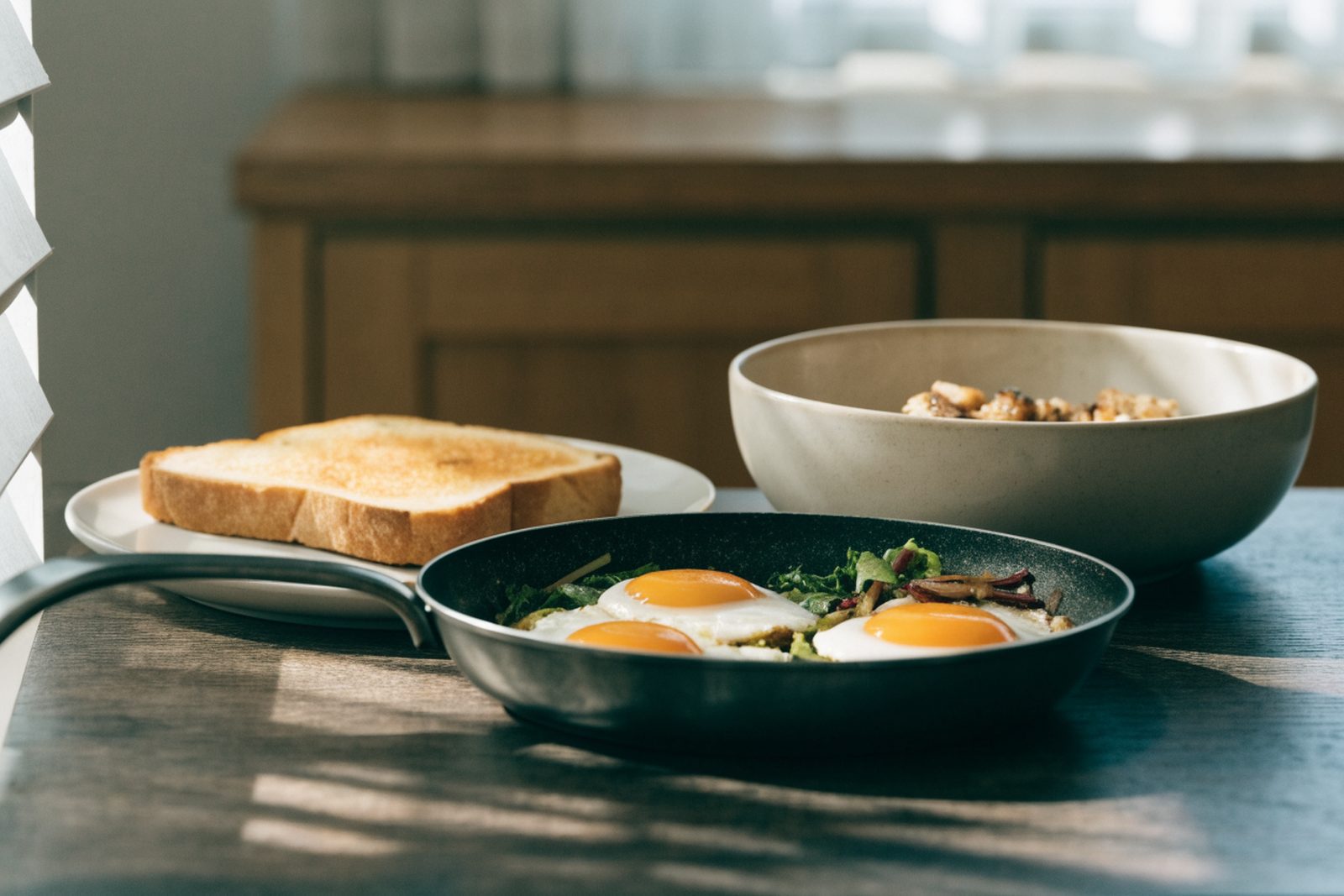
- Five small-batch breakfast ideas: a black bean egg skillet, yogurt oat bowls, salmon potato hash, cottage cheese toast and breakfast fried rice.
- The shopping list repeats a few ingredients instead of leaving half-used vegetables and herbs behind.
- Cook rice once for the fried rice, keep raw salmon cold or freeze it, and use the storage table as the week moves along.
- Amounts are rough starting points for one or two people. Add or reduce the starch, vegetables or eggs to suit your table.
On this page
Breakfast gets awkward when you cook for one or two. A full recipe can leave you with half a bag of spinach, a lone pepper and a tub of yogurt that needs attention before the week is over. The answer is not making the same bowl every morning. It is choosing a few meals that share ingredients and feel different on the plate.
These high protein breakfast meals use eggs, beans, yogurt, vegetables, rice and a few pantry staples. The portions are small, the flavors move around, and you can cook parts of the plan ahead without turning breakfast into a second job. I would shop once, prep the vegetables, and decide which meal needs the fresh fish first.
The short shopping list
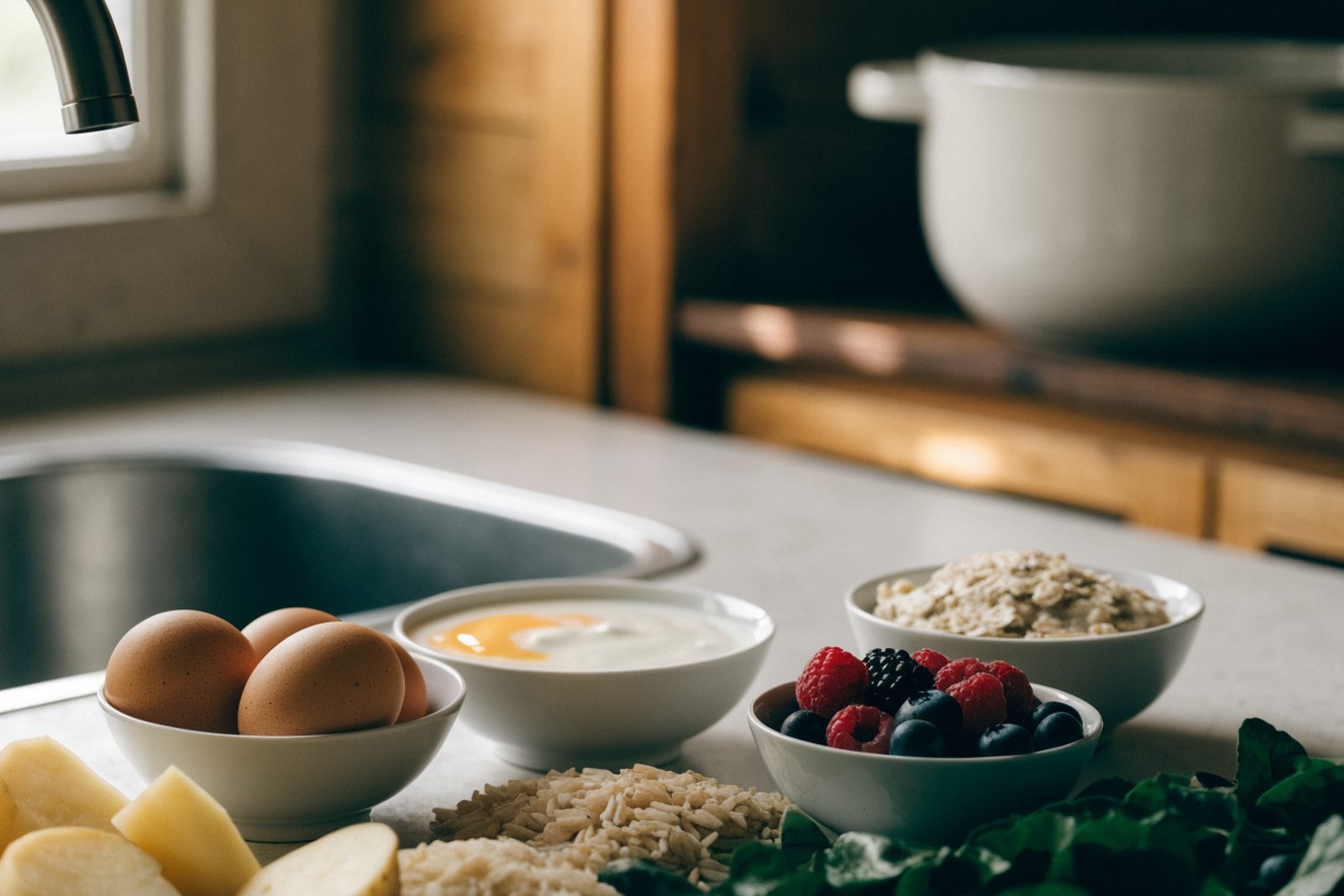
The amounts below are rough starting amounts for one or two people. Pick the smallest practical package of fresh ingredients, and use the freezer for anything you will not cook soon.
| Ingredient | Starting amount | Used in |
|---|---|---|
| Eggs | 8 | Black bean egg skillet; salmon potato hash; breakfast fried rice |
| Black beans | 1 can | Black bean egg skillet; breakfast quesadilla |
| Plain Greek yogurt | 1 small tub | Yogurt oat bowls |
| Rolled oats | 1 cup | Yogurt oat bowls |
| Peanut butter | Small jar | Yogurt oat bowls |
| Frozen berries | 1 cup | Yogurt oat bowls |
| Salmon fillets | 1 or 2 | Salmon potato hash |
| Potatoes | About 1 lb | Salmon potato hash |
| Cottage cheese | 1 small tub | Cottage cheese toast |
| Whole grain bread | 4 slices | Cottage cheese toast |
| Rice, dry | About 1 cup | Breakfast fried rice |
| Frozen peas | About 1 cup | Breakfast fried rice |
| Spinach | 1 small bag | Black bean egg skillet; salmon potato hash; cottage cheese toast |
| Bell pepper | 1 | Black bean egg skillet; breakfast fried rice |
| Green onions | 1 bunch | Black bean egg skillet; breakfast fried rice; cottage cheese toast |
| Tomatoes | 2 | Cottage cheese toast; black bean egg skillet |
| Whole grain tortillas | 2 | Breakfast quesadilla |
| Shredded cheese | About 1 cup | Black bean egg skillet; breakfast quesadilla |
| Lime, olive oil, salt, pepper, cumin and hot sauce | Pantry amounts | All savory meals |
When you get home, wash and dry the spinach and green onions, chop the pepper, and put the salmon in the freezer if you will not cook it soon. Raw fatty fish such as salmon keeps 1 to 3 days in the fridge. Move frozen salmon to the fridge the night before you plan to use it.
Black bean egg skillet
This is the savory breakfast to make when you want something hot and filling without using every pan in the kitchen. The beans give the eggs some substance, while tomatoes and lime keep the skillet from tasting heavy.
- Warm olive oil in a skillet. Add the chopped bell pepper and the white parts of the green onions with a pinch of salt. Cook until the pepper softens.
- Add the drained black beans, cumin and a spoonful of hot sauce. Stir until the beans are hot.
- Make two small spaces in the skillet and crack in the eggs. Cover the pan until the whites are set and the yolks are as firm as you like. For a fully set egg dish, use a thermometer and cook to 160°F.
- Scatter over shredded cheese, chopped tomato and the green onion tops. Finish with lime.
For one person, use half the beans and one or two eggs. Keep the other half of the beans for the breakfast quesadilla.
Yogurt oat bowls
This is the no-stove option. Oats, peanut butter and berries make a plain yogurt bowl feel like a proper breakfast, and each person can build a different version from the same ingredients.
- Spoon plain Greek yogurt into a bowl or jar. Stir in rolled oats and a small spoonful of peanut butter.
- Add frozen berries on top. They soften as the bowl rests, or you can use them while still cold.
- Finish with another swirl of peanut butter, a pinch of salt or a few chopped green onions if you are making a savory variation with no berries.
Make only the servings you expect to eat soon. If you prefer more texture, keep the oats and berries separate until breakfast and stir them in at the table.
Salmon potato hash
This one uses the fresh fish and potatoes in the same pan. It works for breakfast, but it also makes sense as a late brunch when you want something more substantial than toast.
- Cut the potatoes into small cubes. Toss them with olive oil, salt and pepper, then cook them in a skillet until browned and tender.
- Add the chopped spinach and the white parts of the green onions. Stir until the spinach wilts.
- Season the salmon with salt and pepper. Cook it in a separate section of the skillet or in a second pan until the center reaches 145°F. Break it into large flakes.
- Fold the salmon through the potatoes. Serve with a fried or poached egg cooked to 160°F, plus lime and the green onion tops.
Use one salmon fillet for a single serving and two if you are feeding two people. If fish is not on your list, use the potato and spinach base with two eggs instead.
Cottage cheese toast
Toast is useful when you want breakfast to be quick but still want more than a piece of fruit. Cottage cheese adds a cool, creamy layer, while tomatoes, spinach and green onions keep it fresh.
- Toast the bread until the edges are crisp.
- Spread cottage cheese over each slice. Add a pinch of salt, pepper and lime zest.
- Top with sliced tomatoes, a small handful of spinach and green onion tops. Add hot sauce if you like heat.
- For a warmer plate, wilt the spinach in a skillet first, then spoon it over the cottage cheese toast.
This is also a good way to use the last tomato before it gets soft. The ingredients are simple enough that you can change the toppings without changing the meal.
Breakfast fried rice
Cook the rice on a day when you have a little more room in the kitchen, then turn it into breakfast later. The cold rice separates in the pan and takes on the flavor of the pepper, peas and green onions.
- Cook the rice according to the package directions. Spread it in a shallow container so it cools quickly, then refrigerate it within 2 hours.
- Heat oil in a wide skillet. Add the bell pepper, the white parts of the green onions and the frozen peas. Cook until the vegetables are hot.
- Add the cold rice and stir until it is steaming hot throughout. Add a small splash of soy sauce if you keep it in the pantry.
- Push the rice to one side. Crack in the eggs and scramble them until fully set, then stir them through the rice. Finish with green onion tops and hot sauce.
For one, use a smaller portion of rice and one egg. For two, use the larger end of the starting amounts. The meal is flexible, but do not leave cooked rice sitting on the counter while you decide what to do with it.
A simple prep order
| When | Task | Breakfast it supports |
|---|---|---|
| Shopping day | Wash greens, chop pepper and green onions, and freeze salmon if needed. | All savory meals |
| First breakfast | Make the black bean egg skillet and save half the beans. | Black bean egg skillet; breakfast quesadilla |
| Next breakfast | Mix yogurt, oats, peanut butter and berries just before eating. | Yogurt oat bowls |
| Fresh-fish day | Cook the salmon potato hash. | Salmon potato hash |
| Rice day | Cook rice, cool it in a shallow container and refrigerate it. | Breakfast fried rice |
The shopping list gives you different textures without asking you to prep five separate recipes. If you want another small-batch meal, the leftover beans can go into the one-person lunch prep plan instead of the quesadilla.
Storage and safety
| Food or situation | Guidance |
|---|---|
| Raw salmon in the fridge | 1 to 3 days; freeze it for longer storage, with 2 to 3 months listed for best quality. |
| Raw eggs in the shell | 3 to 5 weeks in the fridge. |
| Hard-cooked eggs | 1 week in the fridge. |
| Cooked rice and other leftovers | Refrigerate within 2 hours and use leftovers within 3 to 4 days. |
| Reheating leftovers | Heat to 165°F. |
| Egg dishes | Cook to 160°F. |
| Food left at room temperature | Throw it away after 2 hours, or after 1 hour when the temperature is above 90°F. |
Keep the fridge at 40°F or below. If a cooked breakfast has been sitting out past the safe window, do not try to rescue it by reheating. When in doubt, the safer choice is to discard it.
Easy swaps
- Use pinto beans instead of black beans in the skillet or quesadilla.
- Replace spinach with chopped kale. Cook the kale until tender before adding eggs or toast toppings.
- Use leftover roasted potatoes in the fried rice if you have them, but keep the rice portion small so the pan does not become crowded.
- Replace salmon with the egg and potato combination from the hash. Cook the egg dish to 160°F.
- Use a tortilla instead of bread for the cottage cheese toppings, then fold it around the filling.
These meals are meant to give you a pattern, not a strict seven-day menu. Start with the fish or other fresh item, keep a no-cook yogurt bowl in reserve, and let the last breakfast clear out the rice, vegetables and eggs.
Pin this for later
It's on our High-Protein Meal Prep board, so it's easy to find again.
Sources: USDA Food Safety and Inspection Service, Leftovers and Food Safety and Safe Minimum Internal Temperature Chart; FoodSafety.gov, Cold Food Storage Chart. Amounts are starting points, not tested yields. Adjust them to your appetite.