In short
- Three tray dinners for two: lemon chicken with potatoes, salmon with vegetables, and sausage with peppers.
- The same lemons, onions, peppers, potatoes, and greens carry through the list without making every dinner taste alike.
- Use a thermometer for doneness, cool leftovers promptly, and keep cooked food in the fridge for 3 to 4 days.
- Amounts are rough starting points, so adjust the vegetables to the size of your pan and your appetite.
On this page
Sheet pan dinners are useful when you want a real dinner without a sink full of pans. For two people, the trick is not covering the whole tray with food. It is choosing a few ingredients that cook well together, leaving enough room for browning, and using the same small group of groceries in different ways.
This plan gives us three dinners: lemon chicken with potatoes, salmon with green vegetables, and sausage with peppers. Each meal has its own seasoning, so the shared ingredients do not make the week feel like leftovers wearing different clothes. The amounts below are rough starting points for two adults.
The small grocery list
Choose a large rimmed sheet pan for each dinner. Crowding makes vegetables steam instead of brown, so use two pans when the food sits shoulder to shoulder. Keep salt, pepper, olive oil, garlic powder, paprika, dried oregano, and red pepper flakes on hand if you like them.
| Ingredient | Starting amount | Used in |
|---|---|---|
| Boneless chicken thighs | About 1 lb | Lemon chicken |
| Salmon fillets | 2 small fillets | Salmon tray |
| Smoked sausage | About 12 oz | Sausage and peppers |
| Baby potatoes | About 1 lb | Chicken and salmon |
| Bell peppers | 2 | Sausage and salmon |
| Red onion | 1 large | All three trays |
| Broccoli florets | About 3 cups | Lemon chicken |
| Green beans | About 1/2 lb | Salmon tray |
| Lemons | 2 | Chicken and salmon |
| Garlic | 1 head | Chicken and salmon |
| Fresh parsley or dill | 1 small bunch | Finishing |
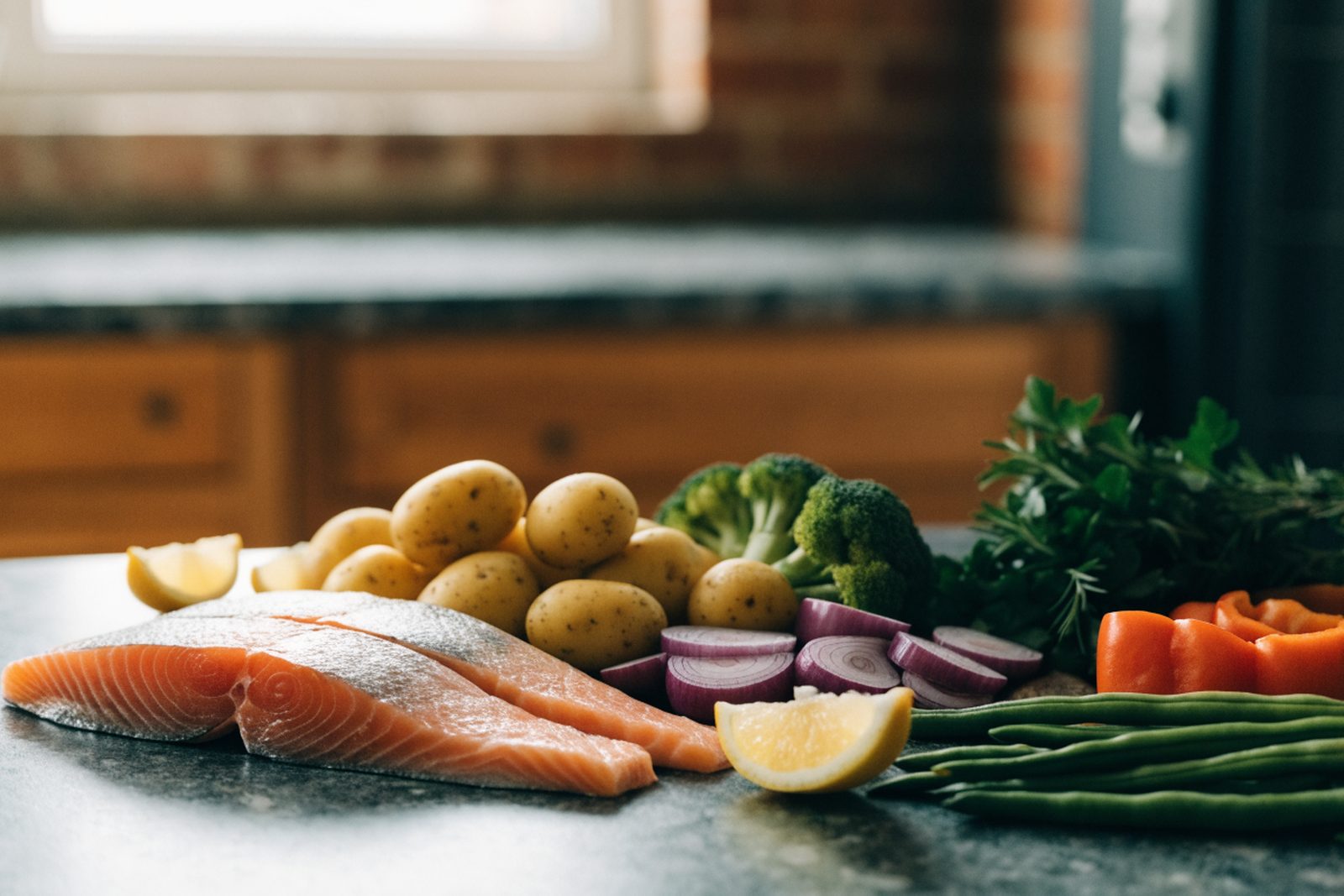
If you are cooking the meals on separate days, keep the chicken and sausage in the fridge only within their storage windows. Freeze the salmon if you will not use it soon, then thaw it in the fridge before cooking. Put vegetables in a visible place so they do not disappear behind a jar of sauce.
How to set up a sheet pan dinner
Start with the ingredient that needs the most heat or space. Potatoes usually need a head start, while fish and leafy vegetables need less time in the oven. Cut pieces to a similar size within each group, but do not force every ingredient into the same shape. Thin pepper strips and thick potato halves should not be treated as equals.
- Heat the oven to 425°F and line a rimmed pan with parchment if you want easier cleanup.
- Dry the vegetables before seasoning them. Water on the surface slows browning.
- Toss each group with enough oil to coat it lightly, then season before it reaches the pan.
- Spread everything into one layer. Leave a little space around the food instead of making a pile.
- Check the thickest piece with a food thermometer. Color helps, but it is not a substitute for a temperature check.
- Move the pan to a heat-safe surface and let the food settle before serving. Add lemon or herbs at the end so the flavor stays fresh.
For another small-household plan that uses overlapping groceries, see our five-dinner plan for two. This sheet-pan version is narrower: each meal is built around one tray and one main ingredient.
Lemon chicken with potatoes and broccoli
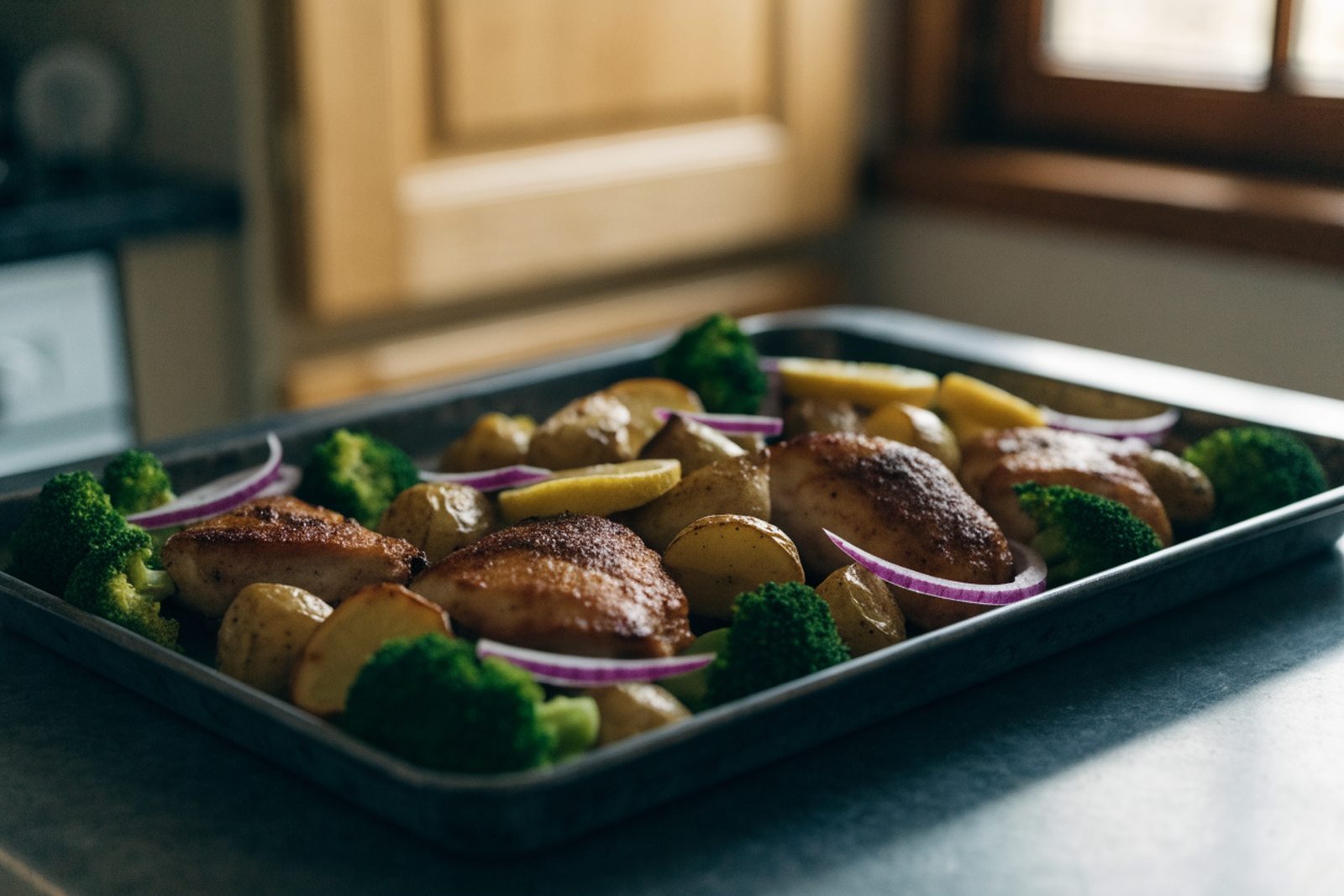
This is the most forgiving tray in the set. The potatoes take the center of the pan, the chicken brings enough savory flavor for the vegetables, and lemon keeps the whole thing from feeling heavy.
- Halve the baby potatoes and cut the red onion into thick wedges. Toss them with olive oil, salt, pepper, garlic powder, and oregano.
- Spread the potatoes and onion on the pan with the cut sides down. Roast until the potato edges begin to color.
- Season the chicken thighs with paprika, pepper, salt, and a little lemon zest. Add them to the pan with the broccoli florets.
- Turn the broccoli once it picks up color. The chicken is ready when the thickest part reaches 165°F.
- Finish with lemon juice and chopped parsley. Spoon the pan juices over the vegetables.
Cut the chicken into smaller pieces only after checking its temperature. If the potatoes are large, halve them again rather than leaving the chicken in the oven while they catch up.
Salmon with green beans and peppers
The salmon tray uses the same potatoes and onion, but the seasoning shifts toward lemon, dill, and black pepper. A little green bean adds a crisp edge beside the soft fish.
- Cut the potatoes into small halves or wedges. Toss them with oil, salt, pepper, and a pinch of paprika, then spread them on the pan.
- Slice half the red onion and one bell pepper. Add them after the potatoes have started to soften, keeping the pieces in a single layer.
- Season the salmon with oil, lemon zest, dill, and pepper. Add it with the green beans.
- Salmon is ready when the thickest part reaches 145°F and the flesh separates easily with a fork. The leftover vegetables should be hot and tender.
- Serve with lemon wedges and a handful of parsley or dill.
If the salmon fillets are different thicknesses, check each one separately. The thinner piece may finish first. Move it to a clean plate while the other piece remains on the pan.
Sausage with peppers and onions
This tray is the change of pace. Sweet peppers and red onion take on a deeper flavor beside sliced sausage, and the pan works with rice, bread, or a simple green salad.
- Slice the sausage into thick coins. Cut the remaining bell pepper and onion into strips.
- Toss the vegetables with olive oil, black pepper, oregano, and a small pinch of red pepper flakes.
- Spread the vegetables over the pan, then add the sausage between them. Keep the pieces apart so they brown rather than steam.
- Turn the sausage and peppers once the first side has colored. Heat the tray until the sausage is steaming hot in the center.
- Finish with lemon juice and parsley. Serve it as is, or spoon it over a small portion of rice.
Check the package instructions for the sausage you have. If it is raw rather than fully cooked, use the appropriate internal temperature for the meat listed on the label and do not rely on color alone.
Swaps that keep the plan small
- Use boneless chicken breast instead of thighs, but cut it into even pieces so the thinner parts do not dry out before the thickest part reaches 165°F.
- Replace salmon with shrimp. Add the shrimp later than the vegetables and check that the center is opaque and reaches 145°F.
- Use cauliflower or zucchini in place of broccoli. Cut cauliflower into small florets; cut zucchini into thick half-moons so it does not disappear.
- Trade the sausage for sliced mushrooms and chickpeas for a vegetarian tray. Spread the chickpeas on a towel first so their surface is dry.
- If you have one small pan, make half the recipe at a time instead of piling everything into a crowded tray.
Keep the seasonings flexible, but do not change the storage rules with the seasoning. The safest swap is the one you can identify, cook to the right temperature, and cool promptly.
Storage and reheating
Move cooked food into shallow containers so it cools evenly. Refrigerate it within 2 hours, or within 1 hour when the room is above 90°F. Keep the fridge at 40°F or below. When you reheat leftovers, bring them to 165°F.
| Food | Fridge guidance | Freezer note |
|---|---|---|
| Cooked chicken, sausage, or vegetables | 3 to 4 days | Freeze for best quality within 2 to 6 months for cooked meat or poultry. |
| Cooked salmon | 3 to 4 days | Freeze for best quality within 2 to 6 months for cooked fish. |
| Raw chicken pieces | 1 to 2 days | Freeze for up to 9 months for best quality. |
| Raw salmon | 1 to 3 days | Freeze for 2 to 3 months for best quality. |
| Any leftovers | Reheat to 165°F | Throw away food left out beyond the room-temperature limit. |
Store sauces and herbs separately when you can. The vegetables keep a better texture that way, and a fresh squeeze of lemon can make a refrigerated meal feel less flat. If a container has been left out longer than the stated limit, discard it rather than trying to rescue it by reheating.
A simple order for the week
- First, make the chicken tray and keep one portion for the next day if you prefer.
- Next, make the salmon while the potatoes and onions are still useful and fresh.
- Finish with sausage and peppers, using the last bell pepper and onion.
- Freeze any raw protein you will not use inside its fridge window, then thaw it in the fridge before cooking.
That is the whole idea behind these sheet pan dinner recipes: one pan, a short ingredient list, and enough variation to make three dinners feel like three dinners. The tray does the work, but the small portions and storage plan are what keep the week manageable.
Pin this for later
It's on our Sheet-Pan Dinners for Two board, so it's easy to find again.
Sources: USDA Food Safety and Inspection Service, Leftovers and Food Safety and Safe Minimum Internal Temperature Chart; FoodSafety.gov, Cold Food Storage Chart. Amounts are starting points, not tested yields. Adjust them to your appetite.